Organic Farming for Beginners in India

Organic farming for beginners in India with an Indian farmer growing healthy organic vegetable crops
An Indian farmer practicing organic farming for beginners in India using sustainable and eco-friendly farming methods.

Introduction

Natural farming is becoming one of the most preferred agricultural methods for farmers who want to grow healthy crops while protecting nature. Unlike conventional farming, organic farming focuses on natural methods that improve soil fertility, encourage biodiversity, and reduce dependence on synthetic chemicals. For anyone interested in natural farming for beginners in India, understanding the basic principles is the first step toward building a sustainable and productive farm.

This guide explains the essential concepts, preparation methods, and practical steps that beginners can follow to start natural farming with confidence.

What Is Organic Farming for Beginners in India?

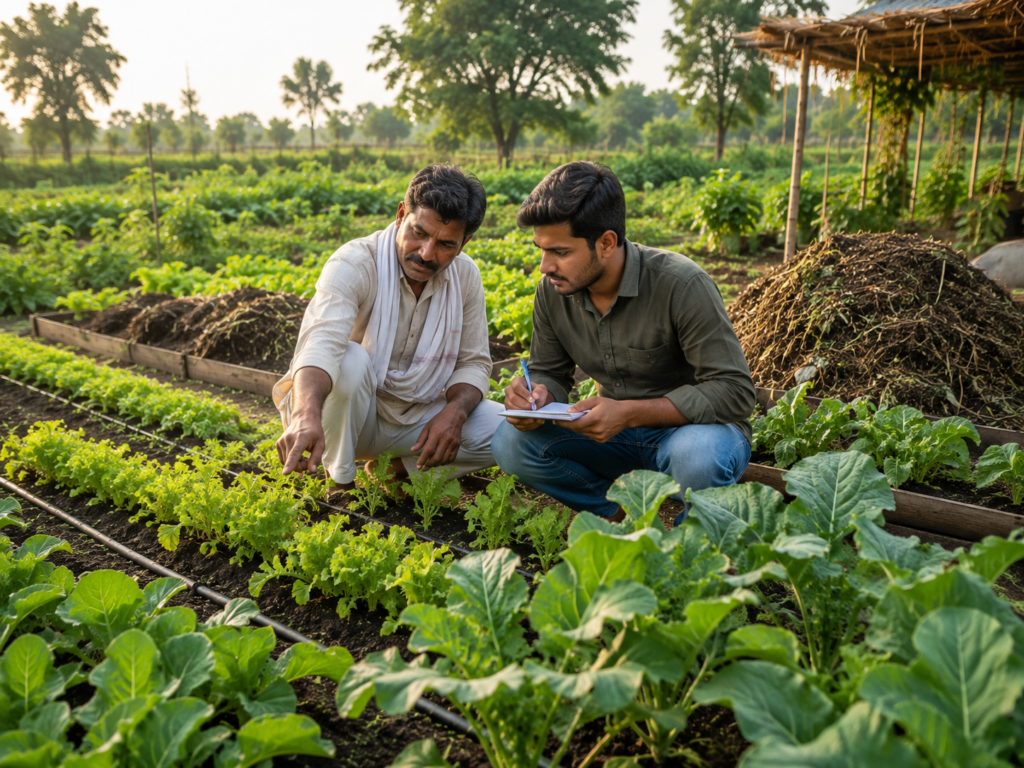
Experienced Indian farmer explaining organic farming for beginners in India in a healthy vegetable field

Organic farming for beginners in India is a natural agricultural system that avoids synthetic fertilizers and chemical pesticides. Instead, it relies on compost, crop rotation, organic manure, and biological methods to maintain healthy crops and fertile soil. Crop Care Tips for Beginners can also help beginners understand how proper crop care supports healthy development throughout the growing season.

Moreover, organic farming encourages farmers to work in harmony with nature while producing safe, nutritious, and environmentally responsible agricultural products.

Why Organic Farming for Beginners in India Is Growing Rapidly

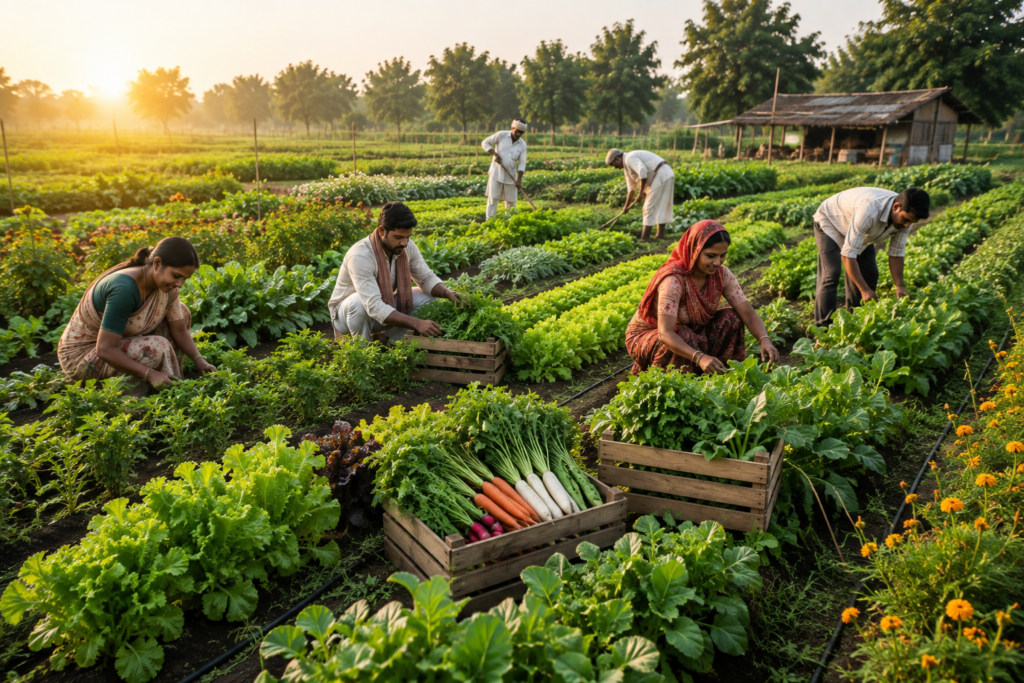
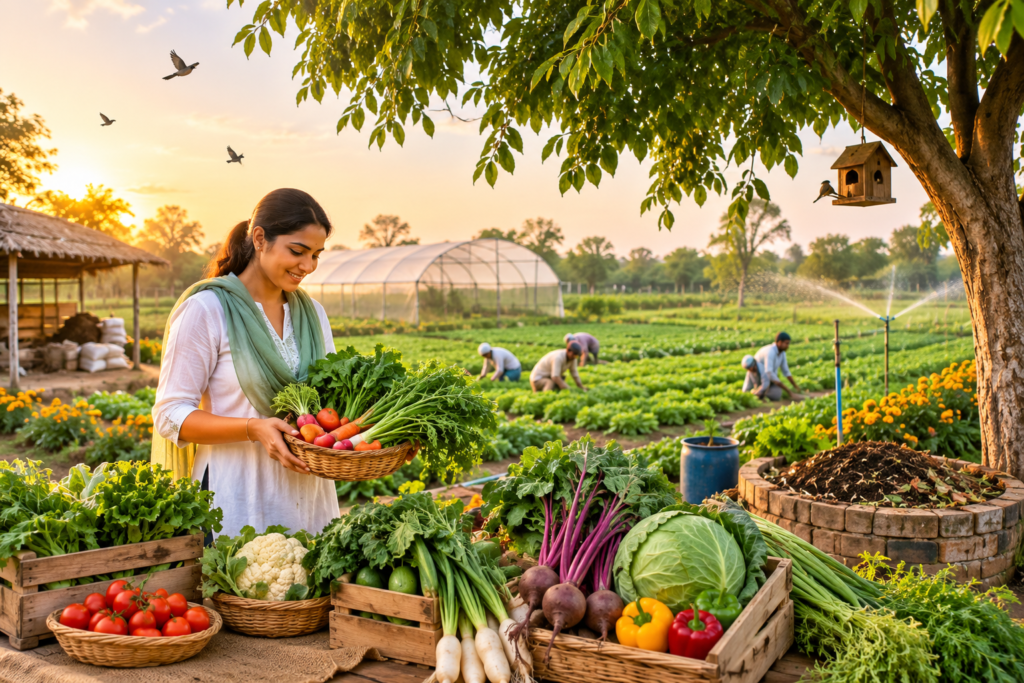
Organic farming for beginners in India with farmers harvesting healthy organic vegetable crops

Many farmers are choosing organic farming for beginners in India because it offers a sustainable approach to agriculture and supports long-term farm productivity.

Growing Demand for Organic Products

Consumers are becoming more aware of food quality and are increasingly choosing naturally grown agricultural products.

Better Protection of Natural Resources

Furthermore, organic farming promotes responsible use of soil, water, and biodiversity, helping preserve natural ecosystems.

Long-Term Farm Sustainability

Following these sustainable practices helps create a balanced agricultural system that remains productive for many years.

Basic Requirements to Start Organic Farming for Beginners in India

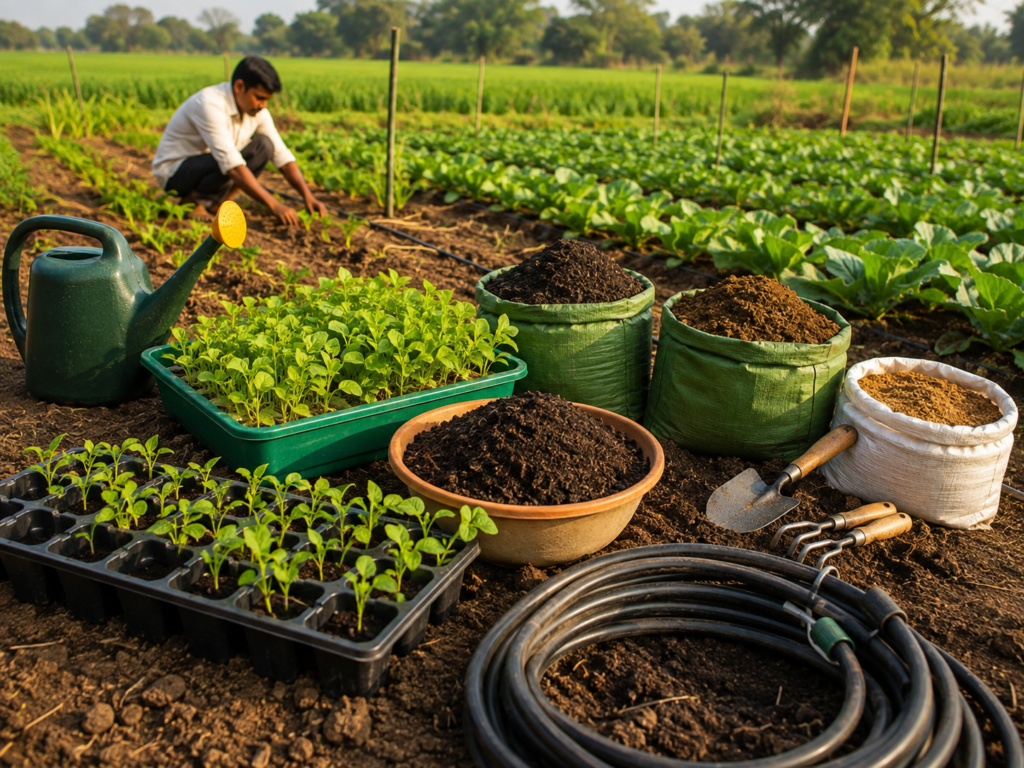
Organic farming essentials including compost, seed trays, gardening tools, and healthy seedlings beside a vegetable field

Before beginning, proper planning and preparation are essential.

Suitable Agricultural Land

For example, select farmland with good soil quality, proper drainage, and enough sunlight for healthy crop growth.

Natural Organic Inputs

Use compost, farmyard manure, vermicompost, and other organic materials in order to improve soil naturally.

Quality Seeds

Choose healthy, high-quality seeds that are suitable for local climate conditions.

Water Management

Specifically, plan efficient irrigation methods to provide crops with adequate moisture while avoiding unnecessary water loss.

Step-by-Step Guide to Organic Farming for Beginners in India

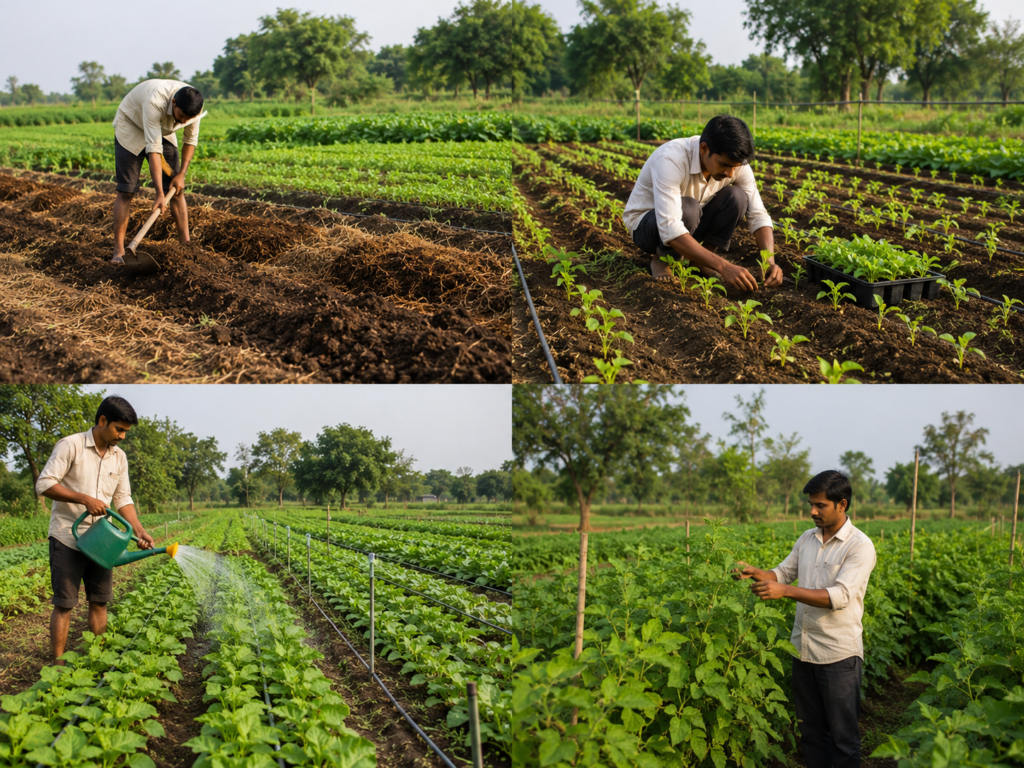
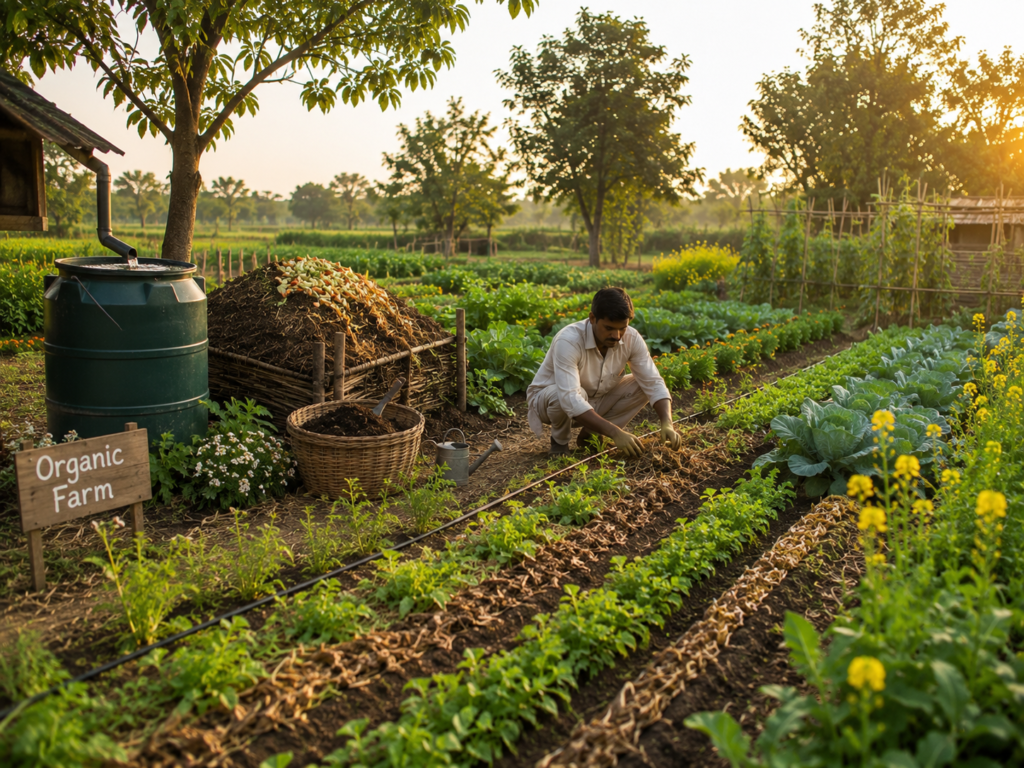
Indian farmer performing different stages of organic farming in a vegetable field

Starting out becomes easier when each stage is planned carefully. 

Prepare the Farm Properly

Clean the land, improve soil naturally, and arrange proper irrigation before planting.

Select Suitable Crops

Choose crops that match the local climate, soil conditions, and seasonal requirements.

Maintain Healthy Soil

For instance, regularly apply organic compost and natural materials to maintain soil productivity.

Observe Crop Growth

Therefore, monitor plant development regularly to identify any issues early and maintain healthy crop growth.

Common Challenges in Organic Farming for Beginners in India

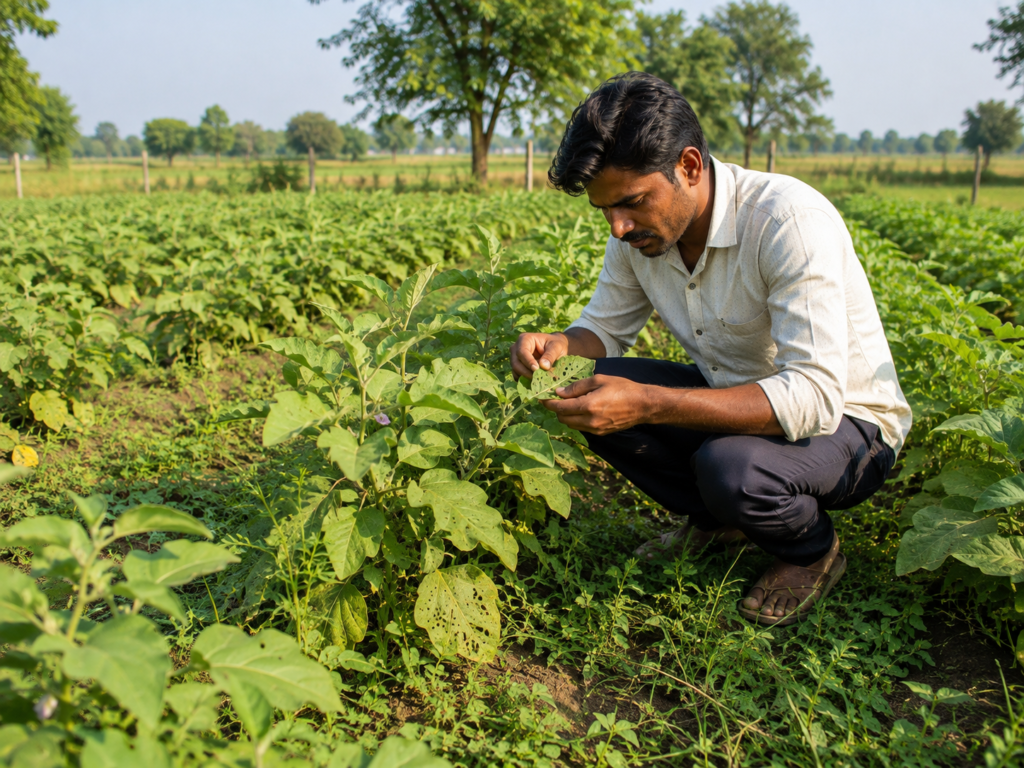
Indian farmer inspecting vegetable plants with weeds and minor insect damage

Starting this journey can be rewarding, but new farmers may face a few challenges during the initial stages. Understanding these challenges in advance helps build a stronger and more successful farming system.

Managing Weeds Naturally

Therefore, regular field monitoring and natural weed management practices help maintain healthy crop growth.”

Building Healthy Soil Takes Time

Indeed, improving soil fertility through organic methods is a gradual process.

Maintaining Crop Health Without Chemicals

Organic farming focuses on preventive care and balanced farm management rather than synthetic chemical treatments. Healthy soil and proper crop management contribute to stronger plants.

Best Practices for Long-Term Success in Organic Farming

Indian farmer using sustainable organic farming practices in a healthy vegetable field

Following the right farming practices helps beginners build a productive and sustainable farm.

Plan Seasonal Farming Activities

Specifically, preparing a seasonal farming schedule helps farmers manage planting, irrigation, and harvesting more efficiently.

Encourage Biodiversity on the Farm

Growing different crops and maintaining natural vegetation supports a balanced agricultural ecosystem.

Keep Learning and Improving

Therefore, successful farmers regularly observe their fields, learn from experience, and adopt better farming practices over time.

How Nidhi Somal Farms Supports Organic Farming

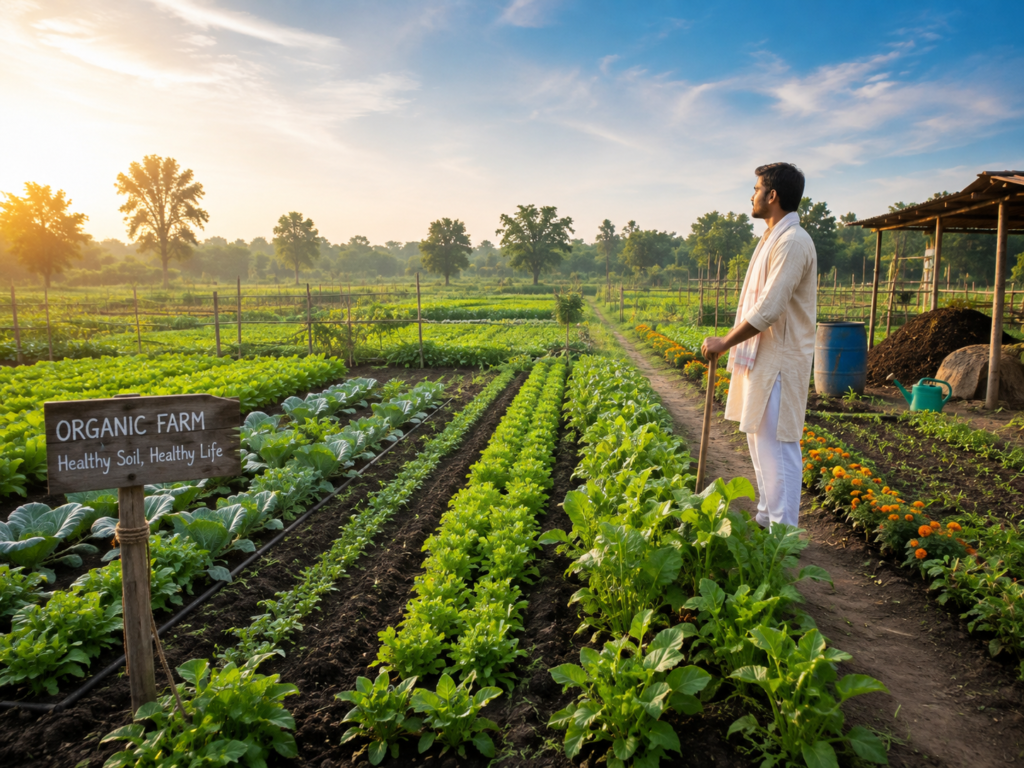
Indian farmer observing a healthy organic vegetable farm with sustainable farming practices

At Nidhi Somal Farms, we believe that sustainable agriculture begins with responsible farming practices. We encourage environmentally friendly cultivation methods that improve soil health, support biodiversity, and produce high-quality crops. By promoting organic farming for beginners in India, we aim to inspire more farmers to adopt natural and sustainable agricultural techniques for a healthier future.

Conclusion

Learning organic farming for beginners in India is an excellent way to build a sustainable farming future. Therefore, with proper planning, healthy soil management, responsible resource use, and continuous learning, beginners can develop productive farms while protecting the environment. Organic farming is not only beneficial for today’s agriculture but also helps preserve natural resources for future generations.

Frequently Asked Questions (FAQs)

1. What is organic farming for beginners in India?

Organic farming for beginners in India is a farming approach that uses natural methods, organic inputs, and sustainable practices to grow healthy crops without relying on synthetic chemicals.

2. Can beginners start organic farming successfully?

Yes. With proper planning, quality organic inputs, and regular farm management, beginners can successfully establish an organic farm.

3. What are the basic requirements for organic farming?

Healthy soil, organic manure, quality seeds, proper irrigation, and regular crop monitoring are the basic requirements for successful organic farming.

4. Why is organic farming becoming popular in India?

Organic farming is gaining popularity because it supports sustainable agriculture, protects the environment, and promotes healthier food production.

5. How does Nidhi Somal Farms encourage organic farming?

Nidhi Somal Farms promotes sustainable farming practices that support healthy crop production, improve soil quality, and encourage environmentally responsible agriculture.

For more information or to contact us, kindly visit my Facebook/Instagram page.

Scroll to Top